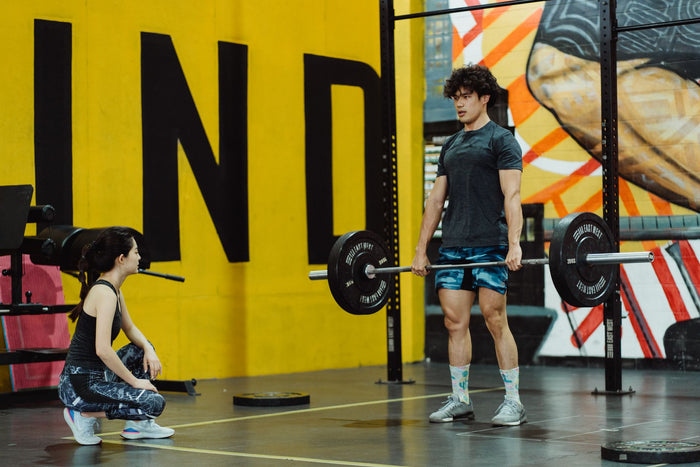
Sarcopenia: What Age-Related Muscle Loss Is, the Numbers That Diagnose It, and the Operator's Protocol to Build Reserve Early

Sarcopenia is not something that happens to old people. It is a slow withdrawal from an account you opened in your twenties, and most operators never check the balance until the account is nearly empty.
You track revenue weekly, cash daily and pipeline by the hour. Muscle, the tissue that carries you up stairs, out of chairs and through a 14-hour launch day, gets checked roughly never. It erodes quietly, the way margin erodes in a business nobody is auditing.
Sarcopenia is the clinical name for that erosion once it crosses a line. This article covers what the term means under current definitions, the numbers that diagnose it, the tests you can run on yourself this week, and the training and protein protocol the guidelines actually support. The point is not fear. The point is to build the reserve while building it is still cheap.
What sarcopenia means, in the current definition
Cleveland Clinic defines it plainly: "Sarcopenia is the gradual loss of muscle mass, strength and physical performance that happens with age" (Cleveland Clinic). The same page notes that sarcopenia received its own ICD-10-CM code in 2016, which turned it from a vague descriptor into a reportable diagnosis.
The most cited definition comes from the European Working Group on Sarcopenia in Older People, revised in 2018 and published as EWGSOP2. Its central shift was to move strength to the front of the line. The group describes sarcopenia as a muscle disease, with "low muscle strength overtaking the role of low muscle mass as a principal determinant" (EWGSOP2, Age and Ageing).
That shift matters for you. Size is a vanity metric. Strength is the operating metric. A person can look reasonably built and still be losing the capacity to produce force, and force is what keeps you independent.
A 2019 review in The Lancet adds two points worth holding onto. Sarcopenia is described as a progressive and generalised skeletal muscle disorder linked to falls, functional decline, frailty and mortality, and it can also occur in mid-life in association with a range of conditions (Cruz-Jentoft and Sayer, The Lancet). It is not a disease that waits for retirement.
Why an operator should care at 35, not 75
The decline starts earlier than most people assume. Cleveland Clinic states that you gradually begin losing muscle mass and strength in your 30s or 40s, and that the process picks up between the ages of 65 and 80. Its estimate of the rate is blunt: "You may lose as much as 8% of your muscle mass each decade" (Cleveland Clinic).
Run that like a compounding problem. Small annual losses look trivial in any single year. Across three decades they decide whether you carry your own luggage at 70 or need someone to carry it for you.
The costs are not only personal. EWGSOP2 reports that among hospitalised older adults, those with sarcopenia on admission were more than 5-fold more likely to have higher hospital costs, and that a community study found direct healthcare costs more than 2-fold higher in older people with sarcopenia (EWGSOP2). The body is a business asset. Sarcopenia is the depreciation schedule nobody wrote down.
The life-course framing from the same consensus paper is the most useful sentence in the literature for anyone under 60:
To prevent or delay sarcopenia development, maximise muscle in youth and young adulthood, maintain muscle in middle age and minimise loss in older age
Most operators reading this sit in the middle clause. Your job is maintenance at minimum, and building if you never built. That is a training decision you make this quarter, not at 70.
The causes you control and the ones you do not
The Stoic dichotomy of control is useful here because the causes split cleanly. Ageing itself is outside your control. Cleveland Clinic lists the internal changes: your body makes protein less efficiently, hormones such as testosterone and IGF-1 shift, and both the size and number of muscle fibers decrease (Cleveland Clinic).
EWGSOP2 separates "primary" sarcopenia, attributed to ageing, from "secondary" sarcopenia, where other causes are evident. It names physical inactivity, whether from a sedentary lifestyle or disease-related immobility, and inadequate intake of energy or protein (EWGSOP2).
Read the risk factors as an operator would read an audit:
- Inactivity. Ten hours at a desk is a muscle-loss protocol unless something offsets it.
- Weight loss without lifting. Cleveland Clinic flags that intentional or unintentional weight loss can lead to sarcopenia, especially without regular resistance exercise, and says to keep this in mind if you are considering a weight-loss medication.
- Low protein. Skipped breakfasts and a late single meal rarely add up to enough.
- Chronic conditions. Heart disease, diabetes and COPD appear on the Cleveland Clinic risk list.
- Smoking and alcohol. Both are listed as risk factors on the same page.
Every item on that list except age is a decision. That is the leverage.
How sarcopenia is diagnosed: the numbers
EWGSOP2 lays out a pathway it calls Find, Assess, Confirm, Severity. Screening uses a short questionnaire. Strength is assessed next. Muscle quantity confirms it. Physical performance grades severity (EWGSOP2).
| Measure | EWGSOP2 cut-off, men | EWGSOP2 cut-off, women | What it signals |
|---|---|---|---|
| Grip strength | <27 kg | <16 kg | Low strength (probable sarcopenia) |
| Chair stand, five rises | >15 s | >15 s | Low strength |
| Gait speed | ≤0.8 m/s | ≤0.8 m/s | Severe sarcopenia |
| SPPB score | ≤8 points | ≤8 points | Poor physical performance |
Low muscle quantity is confirmed with imaging such as DXA or bioelectrical impedance, which Cleveland Clinic describes as the less expensive and more widely available option (Cleveland Clinic). EWGSOP2 itself admits that some of its cut-off points are arbitrary for now and depend on future normative data, so treat the numbers as thresholds for a conversation with a clinician, not a verdict.
The SARC-F screen
SARC-F is a five-item questionnaire: Strength, Assistance with walking, Rising from a chair, Climbing stairs and Falls. Each item scores 0 to 2, for a maximum of 10, and Cleveland Clinic states that a score of 4 or more means you need more testing (Cleveland Clinic). EWGSOP2 notes that SARC-F has low-to-moderate sensitivity, so it will mostly detect severe cases. A clean SARC-F at 45 tells you very little. Strength tests tell you more.
The self-audit: three tests to run this week
These are not a diagnosis. They are a baseline, the same way you would pull a P&L before deciding whether a business is healthy.
- Grip strength. A handheld dynamometer costs little. Take the best of three squeezes per hand. Log it. The EWGSOP2 thresholds above are the floor for older adults; at 40 you want to be far above them, not near them. For why grip tracks so much more than hands, see why grip strength predicts longevity.
- Five-rise chair stand. Standard-height chair, arms crossed over the chest. Time five full stands from seated. EWGSOP2 uses more than 15 seconds as the low-strength cut-off.
- Four-metre walk. Mark four metres, walk at your usual pace, and time it. Divide four by the seconds. EWGSOP2 flags 0.8 m/s or slower as severe.
Repeat all three every quarter on the same day you review the business. A number you measure is a number you manage. If any result sits near a cut-off, or you have noticed weakness, slower walking or a fall, book a doctor.
The protocol: what the guidelines actually support
The International Conference on Frailty and Sarcopenia Research (ICFSR) task force reviewed the evidence and graded its recommendations. Its summary is direct: "we strongly recommend the prescription of resistance-based physical activity, and conditionally recommend protein supplementation/a protein-rich diet" (ICFSR guidelines).
The same guidelines give no recommendation for vitamin D supplementation or anabolic hormones for sarcopenia, and do not recommend drugs as first-line therapy. Cleveland Clinic adds that there are currently no FDA-approved medications to treat it. There is no pill for this. There is a barbell and a plate.
Lift: the resistance block
ICFSR defines resistance-based training broadly: any activity that makes muscles contract against external resistance, including dumbbells, free weights, elastic bands and body weight, with a focus on progressive training (ICFSR guidelines).
On dose, a 2025 meta-analysis of 24 randomised trials in older adults with diagnosed sarcopenia found that most programmes ran 2 to 3 sessions per week, mostly 50 to 60 minutes each. It concluded that "Resistance type and training frequency were key effect modifiers" and that programmes emphasising higher frequency may help (systematic review and meta-analysis, 2025).
The same paper carries a warning every operator should read twice. Once sarcopenia is established, the measured gains in grip strength, gait speed and chair-stand performance did not exceed the thresholds for a clinically meaningful difference. Training still helped. It just could not fully buy back what had been lost. Prevention is cheaper than repair, in muscle as in operations.
The Apex resistance block below is a practical template built on those parameters, not a protocol taken from any single trial:
- Frequency: 3 full-body sessions per week, on non-consecutive days.
- Duration: 45 to 60 minutes, including a 10-minute warm-up.
- Movements: one squat or leg press, one hinge (deadlift or hip thrust), one push, one pull, one carry, one sit-to-stand or step-up pattern.
- Volume: 2 to 3 working sets of 6 to 12 repetitions per movement, finishing each set with 1 to 3 repetitions left in reserve.
- Progression: when you hit the top of the rep range on every set with good form, add the smallest available load next session.
- Log: every set, every week. A training log is a ledger.
If you are starting from zero or returning after years off, the progression rules in fitness for founders over 40 account for slower recovery.
Eat: the protein floor
The PROT-AGE study group recommended that adults over 65 average at least 1.0 to 1.2 g of protein per kilogram of bodyweight per day, at least 1.2 g/kg for those who exercise and are active, and 1.2 to 1.5 g/kg for most older adults with acute or chronic disease (PROT-AGE position paper). The same paper names an exception: older people with severe kidney disease who are not on dialysis may need to limit protein.
Cleveland Clinic translates that into meals, advising 20 to 35 grams of protein per meal (Cleveland Clinic). ICFSR adds that protein intervention should be combined with physical activity. Protein without lifting is groceries. Lifting without protein is a building with no materials delivered.
For the practical side of hitting the number on a founder's calendar, read why most founders are under-eating protein.
If you have kidney disease, another medical condition, or take medication, talk to your doctor before changing protein intake or starting a training programme.
Move: the rest of the week
The WHO fact sheet on physical activity makes the general case in five words that are hard to argue with: "muscle strengthening benefits everyone" (WHO). It also lists falls among the risks that regular activity reduces in adults and older adults. Walk daily, take stairs, carry your own bags. Low-grade movement is not a substitute for lifting. It is the floor under it.
Sarcopenia and the operator's other two pillars
Muscle is the physical pillar, but the failure mode is psychological. Nobody skips training because they misunderstood the science. They skip it because the quarter got loud. That is a discipline problem, and Stoicism treats discipline as a system, not a feeling.
Practise premeditatio malorum on your own body. Picture yourself at 75, unable to rise from a low chair without using your hands. Then ask what you would have needed to do at 40 to prevent it. The answer is boring: three sessions a week, a protein target and a quarterly test. Boring protocols compound.
The AI pillar has a narrow, useful role here. Use an assistant to build the training log, turn your protein target into a weekly shopping list, and flag when a quarterly test result moves the wrong way. It keeps the ledger. It does not lift the weight.
Frequently asked questions
At what age does sarcopenia start?
Muscle loss starts well before sarcopenia is diagnosed. Cleveland Clinic states that you gradually begin losing muscle mass and strength in your 30s or 40s, and that the process speeds up between 65 and 80. EWGSOP2 adds that sarcopenia is common in older adults but can also occur earlier in life, which is why maintaining muscle in middle age is the central prevention advice.
Can sarcopenia be reversed?
Cleveland Clinic says resistance training and higher protein intake can help reverse its effects. A 2025 meta-analysis of 24 trials found resistance training improved strength and function in older adults with sarcopenia, but the gains often fell short of clinically meaningful thresholds. Training helps at every stage. Building muscle earlier, before sarcopenia develops, is the stronger position.
What is the best exercise for sarcopenia?
Progressive resistance training. The ICFSR guidelines strongly recommend resistance-based physical activity as first-line treatment, using weights, machines, elastic bands or body weight. Most trials used two to three sessions per week. Choose full-body patterns such as squats, hinges, pushes, pulls and carries, add load gradually, and match the programme to your health status with a clinician's input.
How much protein do you need to prevent muscle loss with age?
The PROT-AGE study group recommends at least 1.0 to 1.2 g of protein per kilogram of bodyweight daily for adults over 65, and at least 1.2 g/kg for those who are active. Cleveland Clinic suggests 20 to 35 grams per meal. People with severe kidney disease may need to limit protein, so check with a doctor first.
How is sarcopenia tested?
Clinicians often start with the SARC-F questionnaire, where a score of 4 or more prompts further testing. EWGSOP2 then uses grip strength (below 27 kg for men, 16 kg for women) or a five-rise chair stand over 15 seconds to flag low strength, confirms low muscle quantity with DXA or bioimpedance, and grades severity with gait speed.
Is there a medication for sarcopenia?
Not currently. Cleveland Clinic states there are no FDA-approved medications to treat sarcopenia. The ICFSR guidelines give no recommendation for anabolic hormones or vitamin D supplementation for sarcopenia, and do not recommend drugs as first-line therapy. The supported first-line approach is resistance training, combined with adequate protein intake.
Build the reserve while it is cheap
Sarcopenia is a long-dated liability. It accrues silently for decades, and by the time it shows up on a test, the most expensive part of the repair is already due. The operators who stay strong at 75 are not the ones with the best supplements. They are the ones who treated muscle like capital at 40.
Run the three tests this week. Set a protein floor. Book three lifting sessions into the calendar with the same weight as a board meeting. Then do it again next week, and the week after that. Memento mori is not morbid here. It is an instruction to spend the strong years well.
If the hardest part is the consistency, not the knowledge, start with the free 5-Day Stoic Operator Challenge. It installs the daily discipline that every protocol in this article depends on.