Fitness for Founders Over 40: The Protocol That Accounts for Recovery Reality

Fitness Entrepreneurs Over 40: A New Operating Model
The conventional fitness advice – volume, intensity, relentless pursuit – rarely translates for operators over 40. The biology changes. Recovery windows lengthen. Injury risk escalates. The initial gains from a high-volume, high-intensity approach diminish, while the potential for breakdown increases exponentially. We aren’t building a temporary fortress; we’re forging a sustainable operational base. This requires a fundamental shift in how we approach fitness, one anchored in clarity and discipline.
Ryan Holiday writes about the importance of knowing your limits. Understanding those limits isn’t weakness; it’s strategic intelligence. It informs the design of your system. The Apex Protocol isn't a rigid set of rules; it’s a framework for adapting to the specific demands of your physiology and your workload.
The Biology of Decline: It’s Not Laziness
The assumption that a founder over 40 simply ‘lacks motivation’ is a dangerous one. It’s a cognitive bias masking a fundamental shift in the body’s ability to adapt and repair. Hormonal fluctuations – testosterone, estrogen, cortisol – become more pronounced, impacting muscle mass, bone density, and recovery speed. Inflammation lingers longer. The body’s natural repair mechanisms become less efficient.
Naval Ravikant argues for first-principles thinking: break down complex problems into their fundamental truths. The truth is, the body’s capacity for rapid adaptation declines with age. This isn’t a moral failing; it’s physics. Treating it as such is the first step towards a more effective system.
Three Pillars of the Protocol
The Apex Protocol centers on three interwoven pillars: reduced volume, extended recovery, and hormonal optimization. These aren’t isolated interventions; they’re designed to compound. We aren’t simply reducing workouts; we’re strategically managing the system to maximize its long-term output.
Think of it like software development. You wouldn’t deploy a buggy, untested application. Similarly, a haphazard approach to fitness is a recipe for injury and burnout. The protocol is about building a robust, resilient system, one that can withstand the sustained demands of a founder’s life.
Reduced Volume: Strategic Compression
Volume – the total amount of work performed – is a critical factor in fatigue and injury risk. For operators over 40, a significant reduction in overall volume is almost always necessary. This isn’t about sacrificing intensity; it’s about prioritizing quality over quantity. Focus on fewer, more impactful sessions.
This compression creates a window for deeper recovery, allowing the body to rebuild and adapt more effectively. Jocko Willink emphasizes the importance of discipline; this volume reduction requires a sustained commitment to a disciplined approach to training, not a momentary lapse.
Extended Recovery: The New Baseline
Recovery windows lengthen. Accept this as a core principle. Active recovery – light movement, mobility work – is crucial, but passive recovery – sleep, nutrition, hydration – becomes even more paramount. Treat recovery as a core component of the training process, not an afterthought.
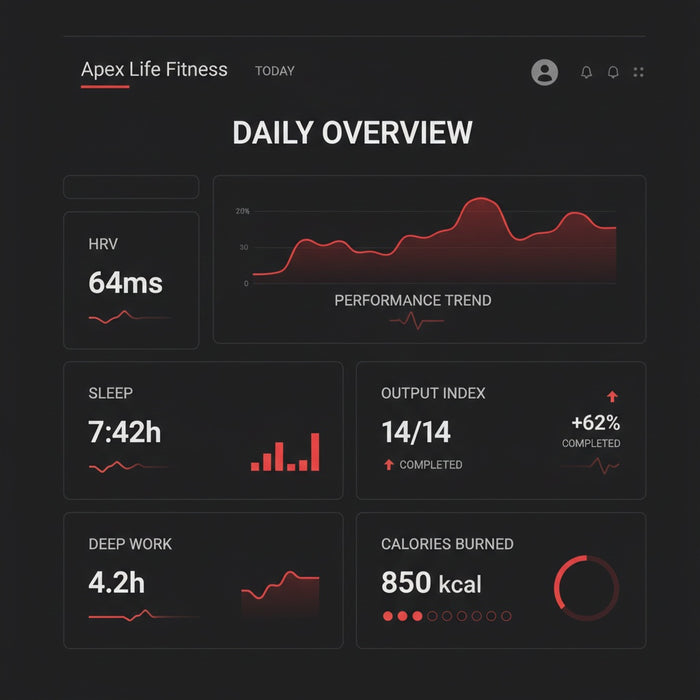
Implement a detailed monitoring system. Track sleep quality, heart rate variability, and subjective fatigue levels. This data provides valuable insights into the effectiveness of your recovery protocols. Fix the OS first – optimize your sleep, nutrition, and stress management – before increasing any training load.
Hormonal Optimization: A Strategic Lever
Hormonal imbalances can significantly impact recovery and performance. Working with a qualified professional – an endocrinologist or functional medicine practitioner – to optimize hormone levels can be a game-changing lever. This isn’t about “hacking” hormones; it’s about restoring balance and supporting the body’s natural processes.
Supplementation, when appropriate, can be a supportive tool, but it’s rarely a silver bullet. Focus on foundational elements: nutrition, sleep, and stress management – these have the biggest impact.
Protocol Step 1: Baseline Assessment
Define Your Operating Parameters
Start with a thorough assessment: movement screening, body composition analysis, hormonal testing. Quantify your baseline. Understand your individual recovery capacity. Don’t rely on generic benchmarks; build a system specific to *you*.
Protocol Step 2: Scheduled Regeneration
Implement Structured Recovery Windows
Schedule dedicated recovery days – no training. Prioritize sleep (7-9 hours), nutrition (focus on whole foods), and stress management (meditation, mindfulness). Treat these days as non-negotiable appointments.
Illustration: The Founder
Consider a founder in his mid-forties who has trained hard for years and now picks up a nagging injury every few months. His instinct is to push through. The protocol asks for the opposite: fewer, sharper sessions, scheduled recovery days, and a baseline assessment before any load goes up.
The expected result is not a dramatic transformation. It is training that he can sustain, fewer setbacks, and the energy to run the business at full capacity. That is what compounding looks like after 40.
The body over 40 is not broken. It is running on different specifications. Build the system for the body you have, and it will keep compounding for decades. Start with the 5-Day Stoic Operator Challenge.