Deadlift Form: The Six-Step Setup, What the Research Says About Your Back, and the Operator's Protocol
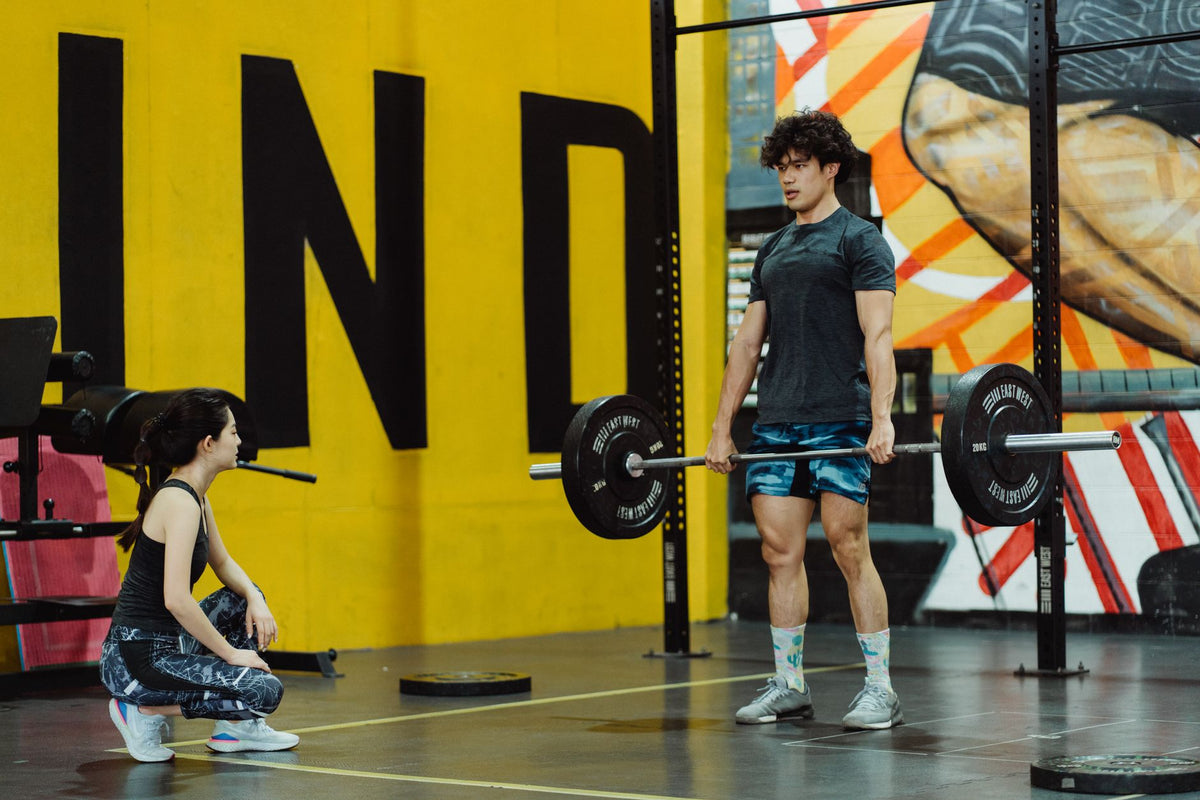
Good deadlift form is not a flat back held at all costs, it is a repeatable hinge that keeps the bar close and lets the hips and legs do the work.
The deadlift has a reputation problem. Half the internet calls it the best lift you can do. The other half treats it as a spinal injury with a barbell attached. Both camps argue about form as if there were one sacred position, and both skip the question an operator actually needs answered: what does a safe, productive rep look like, and how do you build it into a week that already has too much in it?
The answer is less dramatic than either camp suggests. The deadlift is a hip hinge under load. It trains the posterior chain, grip and trunk in one movement, which makes it one of the highest-return lifts per minute in the gym. It also punishes ego and impatience faster than almost any other exercise.
This article covers the setup and the pull step by step, what the biomechanics research says about the back, conventional versus sumo versus the trap bar, the errors that matter, and a weekly protocol. Education, not advice: if you have a back injury, a heart condition or take medication, talk to your doctor or a physical therapist before you load a barbell.
Why the deadlift earns a place in an operator's week
The baseline requirement is modest. The Physical Activity Guidelines for Americans state that "Adults also need muscle-strengthening activity, like lifting weights or doing push-ups, at least 2 days each week." Two short sessions clear it. The question is which movements give you the most return inside those sessions.
The deadlift is a strong candidate because of how much tissue it recruits. A 2002 electromyography study in Medicine and Science in Sports and Exercise recorded 16 muscles in collegiate football players and reported "Moderate to high co-contractions from the quadriceps, hamstrings, and gastrocnemius" during the lift. Add the back extensors, the glutes and the forearms holding the bar, and one movement covers most of what a desk punishes.
Grip is a side benefit worth naming. Holding a heavy bar for sets of five is grip training whether you plan it or not, and the research on why grip strength tracks with longevity makes that a useful by-product rather than a footnote.
Deadlift form, step by step
The conventional barbell deadlift is the reference version. Learn it in five positions, then link them into one motion. Film the first sessions from the side. Your sense of where your back is will be wrong at first; the camera will not.
1. Feet and bar
Stand with feet roughly hip-width apart, toes pointed straight or slightly out. The bar sits over the middle of your foot, which on most people puts it an inch or so from the shins. Look down: the bar should cut your foot roughly in half.
2. Grip
Hinge down and take the bar with both palms facing you, hands just outside your legs. Use a double overhand grip for as long as you can hold it. When the load outgrows your grip, use chalk, then straps or a mixed grip for top sets only.
3. Shins to the bar
Bend the knees until the shins touch the bar. Do not move the bar to your shins. If the bar rolls forward, the setup is lost and you start again.
4. Set the back
Lift the chest, pull the slack out of the bar until you hear it click against the plates, and brace the trunk as if about to be hit in the stomach. Take a breath into the belly before you brace. The hips settle wherever this tension puts them, usually above the knees and below the shoulders. They are not a fixed number of degrees.
5. Push the floor away
Drive through the whole foot. The bar travels in a straight vertical line, dragging up the shins and thighs. Hips and shoulders rise at the same rate. At the top, stand tall with glutes squeezed. Do not lean back.
6. Return with control
Push the hips back first, keep the bar against the thighs, and bend the knees only once the bar passes them. Set it down; do not bounce it. Each rep starts from a dead stop, which is where the name comes from.
What the research says about your back
The most common fear is spinal flexion: the rounded back. The evidence here is more nuanced than either camp admits, and the honest summary is that some flexion is normal under heavy load and large uncontrolled flexion is what you train away from.
A 1992 videofluoroscopy study in the Journal of Biomechanics watched the lumbar vertebrae of national-class powerlifters during conventional deadlifts with 183.7 to 210.9 kg. It found that they lifted "with an amount of lumbar flexion between 1.5 and 13 degrees less than they demonstrated during full flexion." The authors concluded that the "ligaments did not strain sufficiently to contribute substantial resistance to the trunk flexion moment, relegating this responsibility to the musculature."
Read that carefully. Even elite lifters were not perfectly flat. But they stayed short of end range, and their muscles, not their passive tissues, carried the load. That is the standard to build toward: a braced, muscle-held spine, not a fragile pose you abandon on rep four. This was four lifters, so treat it as a mechanism, not a rule for every body.
Deadlifts and low back pain
The deadlift has also been tested as a treatment. In a randomized controlled trial in the Journal of Orthopaedic and Sports Physical Therapy, 70 people with recurrent low back pain did either low-load motor control exercise or a high-load lifting program over 8 weeks. Both groups improved in pain intensity, strength and endurance, with "no significant between-group differences in pain intensity." The motor control group did better on activity and movement control.
A follow-up from the same research group asked which patients benefit from deadlift training. People with less disability, lower pain and better back-extensor endurance at baseline did best. The authors advised professionals "to ensure that clients have sufficient back extensor strength and endurance and a sufficiently low pain intensity level" before using the lift in rehab.
The wider picture comes from a 2021 systematic review and meta-analysis in Sports Medicine Open covering 408 participants. It concluded that "12-16 weeks of PCRT had a statistically significantly greater effect than GE on pain, level of disability and muscular strength," where PCRT is posterior-chain resistance training and GE is general exercise. It also reported no significant difference in adverse events. The operator reading: a hurting back is a reason to get assessed and build up gradually, not automatically a reason to never hinge again.
Conventional, sumo or trap bar
The stance and the bar change which muscles work hardest. None is the one true deadlift. Pick by goal and by what your body tolerates.
- Conventional. Narrow stance, hands outside the knees. The reference pattern for learning the hinge, and the version most programs assume.
- Sumo. Wide stance, hands inside the knees, more upright torso. The 2002 EMG study found activity from the vastus medialis, vastus lateralis and tibialis anterior "significantly greater in the sumo deadlift," while the medial gastrocnemius worked harder in the conventional pull. Its conclusion: lifters "may choose to employ either the sumo or conventional deadlift style, depending on which muscles are considered most important according to their training protocols."
- Trap bar (hexagonal bar). You stand inside the frame, so the load sits in line with your body rather than in front of it.
The case for the trap bar
For most operators who are not competing, the trap bar is the default recommendation. In a biomechanical study of 19 male powerlifters, the hexagonal bar produced "lower peak moments at the lumbar spine, hip, and ankle" and an increased peak moment at the knee. Lifters also moved a heavier one-rep max with it, 265 kg against 245 kg.
A 2016 study of 20 experienced men found no significant 1RM difference between bars, but different muscle emphasis: more quadriceps with the hex bar, more hamstring and erector activity with the straight bar. The authors wrote that "the barbells led to different patterns of muscle activation and that the hexagonal barbell may be more effective at developing maximal force, power, and velocity."
The decision rule is simple. Use the trap bar if your priority is strength with less load on the lower back, or if you train alone with no one to check your form. Use the straight bar if you want more hamstring and back-extensor work and you are willing to film and review your reps.
The six errors that matter
Most form debates focus on details that do not change outcomes. These six do.
- Bar drifts forward. Every inch of distance from your midfoot multiplies the load on your back. Keep it dragging up the legs.
- Hips shoot up first. The legs straighten, the bar stays down, and the back finishes the lift alone. Usually a sign the load is too heavy or the brace is lost.
- Jerking the bar off the floor. Pull the slack out first. A yank turns a controlled pull into a shock load.
- Losing the brace mid-set. Reset breath and brace on every rep from the floor. Rep five should look like rep one.
- Hyperextending at the top. Leaning back to "finish" adds nothing. Stand tall, squeeze the glutes, stop.
- Grinding to failure. The deadlift is the wrong lift to test your limits on a Tuesday. End every set with one or two clean reps left in reserve.
If you sit all day, tight hips and a weak upper back make several of these worse. Pair the deadlift with the posture exercises built for operators who sit and the setup gets easier within weeks.
The operator's deadlift protocol
The protocol below is built for someone who trains two or three times a week and cannot afford a week off with a tweaked back. Progress is slow on purpose. The compounding comes from never missing a month, not from any single heavy day.
Weeks 1-2: learn the hinge
- Before each session: 2 sets of 10 hip hinges with a dowel along the spine, touching the back of the head, upper back and tailbone.
- Then 3 sets of 8 Romanian deadlifts or kettlebell deadlifts at a load that feels easy. If you train with kettlebells at home, the beginner kettlebell protocol covers the same hinge.
- Film one set from the side each session. Check bar path and back position before adding load.
Weeks 3-8: build the working sets
- Twice a week, on non-consecutive days.
- Warm up with an empty bar or light trap bar, then 2-3 ramp-up sets of 3-5 reps.
- Working sets: 3 sets of 5 reps, leaving 2 reps in reserve on each set.
- Rest 2-3 minutes between sets.
- When all three sets feel clean, add 2.5 to 5 kg next session. If form breaks, hold the load for another week.
Week 9 onward: one heavy, one light
- Day A: 3 sets of 3-5 at a challenging load, still 1-2 reps in reserve.
- Day B: 3 sets of 6-8 Romanian deadlifts at a moderate load, focused on the hinge and the stretch in the hamstrings.
- Every fourth to sixth week, cut volume roughly in half. The deload week protocol explains how to run it without losing ground.
Use AI as a training log, not a coach. Paste your sets, loads and notes into an assistant once a week and ask it to flag stalled lifts and rising effort at the same load. The decision about what to change stays with you.
Frequently asked questions
What is correct deadlift form?
Correct deadlift form starts with the bar over the middle of the foot, shins touching the bar, a double overhand grip just outside the legs and a braced trunk. Push the floor away so the bar travels straight up against the legs, hips and shoulders rising together. Stand tall at the top without leaning back, then lower with the hips moving back first.
Is it bad if my back rounds slightly when I deadlift?
A small amount of lumbar flexion is common even among elite lifters. A fluoroscopy study of national-class powerlifters found they stayed short of full spinal flexion and their muscles, not ligaments, carried the load. Large or increasing rounding as a set goes on is the problem. Reduce the load, reset the brace on every rep, and film your sets to check.
Is the trap bar deadlift better than the barbell deadlift?
Neither is better for everyone. Research on the hexagonal bar found lower peak moments at the lumbar spine, hip and ankle, with more demand on the knee and quadriceps. The straight bar produced more hamstring and erector spinae activity in another study. For general strength with less lower-back load, the trap bar is a sensible default. For posterior-chain emphasis, use the straight bar.
How often should I deadlift?
Most people do well with heavy deadlifts once or twice a week, on non-consecutive days. The lift is demanding on the back, grip and nervous system, so more is rarely better. A simple structure is one heavier day of 3 sets of 3-5 and one lighter day of Romanian deadlifts, with a lighter week every four to six weeks.
Can deadlifts help with low back pain?
For some people, yes. A randomized trial found a high-load lifting program improved pain about as much as motor control exercise, and a meta-analysis found 12-16 weeks of posterior-chain training beat general exercise on pain and disability. People with lower pain and better back-extensor endurance benefited most. Get assessed by a clinician first and build up under supervision.
The lift is a mirror
The deadlift tells the truth about your preparation. Epictetus said it of the athlete in the Enchiridion: before you aim at the prize, "consider what precedes and follows." The athlete must "exercise your body, whether you choose it or not, at a stated hour, in heat and cold." A heavy pull rewards exactly that: the boring sessions, the filmed sets, the weeks you held the load instead of chasing it.
That is also how an operator builds a business. The dichotomy of control applies to the bar: you cannot control what your one-rep max is today, only whether your setup is the same as last week. Own the setup, and the numbers follow.
If you want the same discipline applied to the rest of your day, start with the free 5-Day Stoic Operator Challenge. Five days, one practice each, built for people who would rather install a system than wait for motivation.