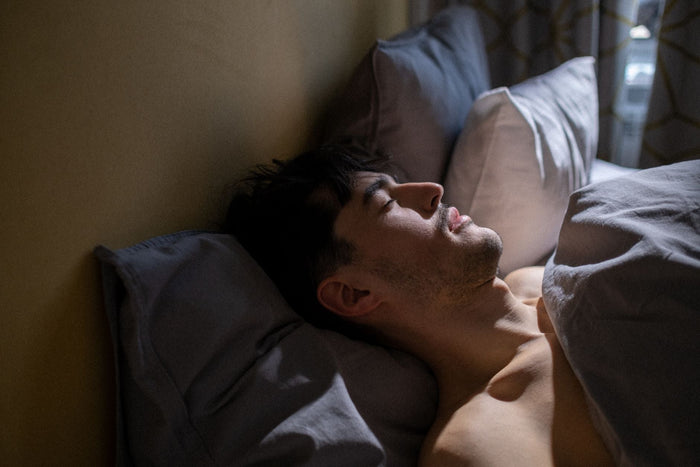
How to Lower Cortisol: What the Evidence Supports and the Operator Protocol

Cortisol is not the enemy. Cortisol that never gets permission to switch off is.
Operators run on it. The 6 a.m. alarm, the pitch, the payroll week, the launch that slipped. Cortisol gets you through all of it, doing exactly what it evolved to do. The problem starts when the load never ends and the hormone never gets its evening.
Type "how to lower cortisol" into a search bar and you will meet an industry: adaptogen blends, "cortisol detox" powders, saliva tests sold with a protocol attached. Almost none of it has evidence you would accept in a board deck.
This article does the opposite. It takes what cortisol actually does, separates chronic stress from medical disease, walks through six levers with the study behind each one, and turns them into a 14-day protocol you can run without buying anything. Education, not diagnosis: if you have a medical condition or take medication, including steroids, talk to your doctor before changing anything.
What cortisol does, and why you want a steep curve, not a low one
The Cleveland Clinic describes it plainly: "Cortisol is a steroid hormone that your adrenal glands (the glands on top of your kidneys) make." It regulates how your body uses glucose for energy, decreases inflammation, regulates blood pressure, helps control your sleep-wake cycle and manages your stress response.
None of those are things you want less of. You want them on a schedule. The same source notes that "most people have lower cortisol levels in the evening when they go to sleep. And they have peak levels in the morning right before they wake up." That morning peak is what gets you out of bed with intent. The evening trough is what lets you sleep.
So the target is not "low cortisol." It is a steep daily curve: high and early, falling through the afternoon, quiet at night. Every lever below works by restoring that shape. The cortisol curve article covers the shape in more depth; this one covers how to move it.
When high cortisol is a medical problem, not a lifestyle one
Persistently high cortisol from a medical cause is Cushing syndrome. The Cleveland Clinic lists its causes as high-dose corticosteroid medications such as prednisone, prednisolone and dexamethasone, ACTH-producing tumors (usually in the pituitary gland), and adrenal gland tumors. Its symptoms include weight gain especially in the face and belly, fatty deposits between the shoulder blades, purple stretch marks, muscle weakness, high blood sugar, high blood pressure, excessive hair growth and weak bones.
The opposite problem exists too. Low cortisol, adrenal insufficiency, "most often happens when your immune system attacks your adrenal glands. It's called Addison's disease." Fatigue, unintentional weight loss, loss of appetite and low blood pressure are on that list.
Chronic work stress is not Cushing syndrome. Stress triggers cortisol release, and a life with no off-switch keeps the evening level higher than it should be, but that is a rhythm problem, not a tumor. The distinction matters because the fix is different. The Cleveland Clinic's instruction is the right one: "If you have symptoms of Cushing syndrome or adrenal insufficiency, contact your healthcare provider."
Everything below is for the operator whose cortisol is high for the ordinary reason: too much load, too little recovery, for too long.
Six levers, ranked by how direct the evidence is
Each lever comes with the study behind it, what was measured and what was found. Where the evidence is indirect, that is stated.
Lever 1: Protect the whole night of sleep
This is the most direct evidence on the list. A 1997 study in the journal Sleep, "Sleep loss results in an elevation of cortisol levels the next evening," tracked plasma cortisol in normal young men across 32 hours under three conditions: a normal night (2300 to 0700), partial sleep deprivation (sleep only from 0400 to 0800), and total sleep deprivation.
The effect showed up the following evening. After partial and total sleep deprivation, evening cortisol between 1800 and 2300 was higher than the day before by 37% and 45% respectively, and "the onset of the quiescent period of cortisol secretion was delayed by at least 1 hour." The authors concluded that "even partial acute sleep loss delays the recovery of the HPA from early morning circadian stimulation."
One short night does not just make you tired. It pushes the next evening's cortisol up by more than a third and delays the shutdown that lets you sleep, which sets up the night after. That is the spiral every operator recognises. The sleep protocol for founders is the full build; the rule for this article is simpler: the sleep window is not where you find extra hours.
Lever 2: Move caffeine earlier, not out
Caffeine raises cortisol. The useful question is whether daily use blunts that. A 2005 study in Psychosomatic Medicine, "Caffeine stimulation of cortisol secretion across the waking hours in relation to caffeine intake levels," put 96 men and women through a four-week double-blind crossover. Each week they abstained from dietary caffeine for five days while taking capsules totalling 0, 300 or 600 mg a day, then on day six took either 0 or 250 mg at 9 a.m., 1 p.m. and 6 p.m. while saliva cortisol was sampled eight times.
After five days of abstinence, the caffeine doses produced a strong rise in cortisol across the whole test day (p < .0001). After five days of 300 or 600 mg a day, the cortisol response to the 9 a.m. dose was abolished, "although cortisol levels were again elevated between 1:00 PM and 7:00 PM" after the second dose. Levels returned to control values in the evening. The authors' summary: "Cortisol responses to caffeine are reduced, but not eliminated, in healthy young men and women who consume caffeine on a daily basis."
The operator's translation: tolerance protects your morning coffee, not your afternoon one. The 1 p.m. espresso lands on a system that is already supposed to be winding down. Keep caffeine in the morning block. The caffeine strategy article covers timing in detail.
Lever 3: Spend 20 to 30 minutes outside, three times a week
A 2019 study in Frontiers in Psychology, "Urban Nature Experiences Reduce Stress in the Context of Daily Life Based on Salivary Biomarkers," asked 36 urban dwellers to have a "nature experience," defined as time in an outdoor place that brings a sense of contact with nature, at least three times a week for ten minutes or more, over eight weeks. Participants chose the time, place and duration themselves, and gave saliva samples before and after.
The result: "an NE produced a 21.3%/hour drop beyond that of the hormone's 11.7% diurnal drop." The efficiency was "greatest between 20 and 30 min, after which benefits continued to accrue, but at a reduced rate."
A small study with a mostly female sample, so hold the exact percentages loosely. The design is the point: ordinary people, ordinary schedules, no retreat required. A 25-minute walk between the morning block and lunch is a cortisol intervention with a measured effect, and it is free.
Lever 4: Train at the intensity your week can afford
Exercise both raises and lowers cortisol, depending on the dose. A 2008 study in the Journal of Endocrinological Investigation, "Exercise and circulating cortisol levels: the intensity threshold effect," had twelve moderately trained men do 30 minutes at 40%, 60% and 80% of VO2 max on separate days, plus a 30-minute resting control, with time of day, prior diet and psychological stress controlled.
The change in cortisol from before to after each session was minus 6.6% at rest, plus 5.7% at 40%, plus 39.9% at 60% and plus 83.1% at 80%. Low-intensity work did not significantly raise cortisol, and "once corrections for plasma volume reduction occurred and circadian factors were examined, low intensity exercise actually resulted in a reduction in circulating cortisol levels."
Two things follow. A hard session spikes cortisol, and that is normal: it is the signal that drives adaptation, not damage. And in a week where the business already supplies the stress, the easy aerobic session is the one that lowers the load. Zone 2 is the correct dose for a loaded system. Save the 80% sessions for weeks when you have the sleep to absorb them.
Lever 5: A focused-attention practice, daily
Meditation research is full of weak trials. A 2017 meta-analysis in the Journal of Psychiatric Research, "Mindfulness mediates the physiological markers of stress," addressed that by including only randomised controlled trials that compared meditation to an active control, which is the harder test. Forty-five studies qualified.
Across them, "Focused attention meditations also reduced cortisol." Pooling all forms, "meditation reduced cortisol, C-reactive protein, blood pressure, heart rate, triglycerides and tumour necrosis factor-alpha." Focused attention means attention held on one object, a breath, a sentence, a question.
The Stoic evening review is a focused-attention practice that has been run for two thousand years: ten minutes, three questions, pen and paper. It is the practice that fits an operator, because it also closes the business day.
Lever 6: Slow the breath below ten per minute
This lever rests on autonomic evidence rather than a direct cortisol measurement, so it ranks last. A 2018 systematic review in Frontiers in Human Neuroscience, "How Breath-Control Can Change Your Life," examined slow breathing techniques, defined as fewer than ten breaths per minute, across 15 studies that met its criteria out of 2,461 abstracts screened.
The findings: slow breathing "promote[s] autonomic changes increasing Heart Rate Variability and Respiratory Sinus Arrhythmia," EEG studies "show an increase in alpha and a decrease in theta power," and the psychological outputs were "increased comfort, relaxation, pleasantness, vigor and alertness, and reduced symptoms of arousal, anxiety, depression, anger, and confusion." The review did not report cortisol, so treat this as a lever on the stress response, not a measured cortisol drop.
Five minutes at around six breaths per minute before the hardest meeting of the day and again before bed is enough to practise. The founder breathing protocol builds this out into a full system.
What is not on the list
Supplements marketed for cortisol are absent on purpose. None of the sources above tested them, and this article does not recommend doses it cannot source. If you want to explore them, do it with a doctor and a blood test, not a discount code.
Home saliva tests are absent too. One afternoon reading says little about a hormone whose whole story is its daily shape. The Cleveland Clinic's own list for lowering cortisol matches the evidence: quality sleep, regular movement, deep breathing, activities you enjoy, healthy relationships.
The 14-day operator protocol
Six levers, two weeks, nothing to buy. Each lever is installed as a fixed appointment, because an operator keeps appointments and breaks intentions.
Days 1 to 3: lock the edges of the day
- Set a fixed wake time and a fixed lights-out time that gives you the full night. Do not shorten the front of the night to "get ahead." The 1997 study showed that losing the first part of the night raised the next evening's cortisol by 37%.
- Move all caffeine before midday. Morning coffee stays. The afternoon one goes.
- Write the evening review: what you did well, what you did poorly, what you will do differently tomorrow. Ten minutes, pen and paper, same time each night.
Days 4 to 7: add the outdoor block and downshift training
- Schedule three 25-minute outdoor walks this week as calendar events.
- Train four days, all easy or strength. Zone 2 sessions of 45 minutes and one or two strength sessions. No intervals this week.
- Add the five-minute slow breathing block before your hardest meeting. Six breaths per minute: in for roughly five seconds, out for roughly five.
Days 8 to 14: hold the system and reintroduce one hard session
- Keep every appointment from week one. Week two is where protocols die: the novelty is gone and the calendar is full.
- Reintroduce one hard session, only if you slept the night before. If you did not, swap it for zone 2 and try again two days later.
- Add the second breathing block before bed.
- On day 14, review the two weeks the way you would review a sprint: which appointments held, which broke, and why.
What to measure
Not cortisol. Measure what you can see daily: time in bed, resting heart rate on waking, how quickly you fall asleep, and a one-to-five rating of afternoon energy. If you wear a device, HRV is the useful trend line, because it tracks the same nervous system this protocol is trying to settle.
Frequently asked questions
How can I lower cortisol quickly?
The fastest measured effects in the evidence here come from a full night of sleep, a 20 to 30 minute period outdoors, and easy-intensity movement. Slow breathing shifts the stress response within minutes, though the review on it did not measure cortisol directly. Nothing resets a chronic pattern overnight, which is why the protocol runs 14 days.
How do I know if my cortisol is high?
You cannot tell from how you feel, and a single home saliva reading tells you little about a hormone defined by its daily curve. Symptoms of medically high cortisol include weight gain in the face and belly, purple stretch marks, muscle weakness, high blood sugar and high blood pressure. If you have those, see a doctor. Ordinary work stress shows up as poor sleep, afternoon crashes and a wired evening.
Does coffee raise cortisol?
Yes. In a 96-person crossover trial, caffeine produced a strong cortisol rise after five days without it. Daily intake of 300 to 600 mg abolished the response to a morning dose but not to an afternoon one, where cortisol was again elevated between 1 p.m. and 7 p.m. The practical rule is to keep caffeine in the morning, because tolerance protects that dose and not the later ones.
Does exercise raise or lower cortisol?
Both, depending on intensity. In a controlled study, 30 minutes at 60% and 80% of VO2 max raised cortisol by about 40% and 83%, while 40% did not raise it and, after correcting for plasma volume, slightly lowered it. Hard sessions are a normal, useful stress; easy aerobic sessions are the lever when the rest of your life is already supplying the load.
Do supplements lower cortisol?
None of the evidence reviewed in this article tested supplements, so this article makes no claim about them and recommends no doses. The levers with measured effects are sleep, caffeine timing, time outdoors, exercise intensity, focused-attention practice and slow breathing. If you want to try a supplement, do it with your doctor and a proper test rather than a marketing page.
The system lowers cortisol. The intention does not.
Every lever above is a behaviour you already know is good for you. The evidence reveals no secret. It shows how much of the effect lives in the fundamentals, and how precisely: a third more evening cortisol from one short night, an afternoon caffeine response that tolerance never removes, a measurable drop from 25 minutes under trees.
What separates operators who lower cortisol from those who keep searching for how is not information. It is whether the levers are installed as fixed appointments or left as good intentions. Stoicism called this the difference between knowing the principle and practising it, and it is the same difference between a strategy deck and an operating rhythm.
The free 5-Day Stoic Operator Challenge installs that rhythm: training, a daily Stoic review and a structure for the day that keeps load from turning into damage. Start there, then run the 14 days.