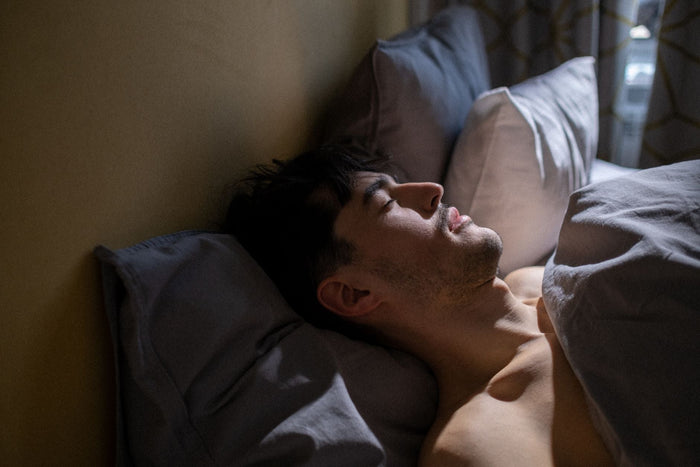
The Cortisol Curve: How to Manage Your Stress Hormones for All-Day Performance

Your Cortisol Is Not Your Enemy
The word "cortisol" has been hijacked by wellness culture. Type it into any search engine and you will find a cascade of content framing it as the villain — the stress hormone, the fat-storage hormone, the thing you need to suppress with adaptogens and breathwork.
That framing is wrong. And it is costing founders their best hours.
Cortisol is a glucocorticoid released by your adrenal glands in direct response to signals from your brain's master clock — the suprachiasmatic nucleus. It is not a byproduct of stress. It is a performance signal. It mobilizes glucose, sharpens attention, coordinates your immune response, and prepares your neurology for high-stakes cognition. The Stoics understood the body as an instrument of the mind. Cortisol is how that instrument tunes itself each morning.
The problem is not cortisol. The problem is that the modern founder's lifestyle consistently fires that signal at the wrong time, in the wrong direction, with no recovery protocol in place. The result is a broken diurnal curve — and a brain that operates at a fraction of its designed capacity.
To fix it, you need to understand the architecture first.
The Diurnal Cortisol Curve: What It Should Look Like
Cortisol follows a predictable 24-hour pattern in a well-regulated system. This is called the diurnal cortisol rhythm, and it runs on a circuit between your brain and your adrenal glands called the HPA axis — hypothalamic-pituitary-adrenal.
Under normal conditions, the curve looks like this:
Cortisol begins rising approximately 30 to 60 minutes before you wake. It peaks within 30 to 45 minutes after waking — a surge called the Cortisol Awakening Response (CAR). This morning peak typically lands between 15 and 25 micrograms per deciliter in healthy adults. From there, it declines steadily throughout the day, reaching its lowest point between midnight and 4 AM, when your brain is consolidating memory and your body is executing cellular repair.
This curve is not arbitrary. The morning peak is calibrated for high-focus, high-stakes cognition. The afternoon taper enables task-switching and creative synthesis. The evening floor enables recovery and restoration. The Apex operator learns to align their work architecture with this curve, not fight it.
What disrupts the curve — and what restores it — is the difference between operating at capacity and running on borrowed time.
The Four Cortisol Disruptors Hiding in Your Routine
The typical founder is not lazy. The typical founder is disciplined in precisely the wrong directions. Here are the four most common cortisol curve disruptors embedded inside what most high-performers call their "morning routine."
Disruptor 1: Caffeine Before Your Cortisol Peaks
The default behavior: wake up, immediately reach for coffee. This feels productive. It is not. Cortisol and caffeine both push alertness up, by different routes. When you consume caffeine while cortisol is still rising — typically between 6 and 9 AM for most chronotypes — you are doubling a signal that is already elevated. You accelerate tolerance to caffeine, blunt the natural cortisol peak, and create a dependency cycle that will compound into afternoon crashes and disrupted sleep architecture.
The protocol shift: Delay caffeine intake by 90 to 120 minutes after waking. Use the cortisol peak for your highest-leverage cognitive work without chemical assistance. Caffeine taken at 9:30 or 10:00 AM — as natural cortisol begins its first decline — extends the alert window rather than overriding it.
Disruptor 2: Blue Light Exposure at Night
Cortisol and melatonin are inversely coupled. When light hits your retinal ganglion cells — particularly in the 480-nanometer blue wavelength range — it suppresses melatonin via the retinohypothalamic tract. Suppressed melatonin means the HPA axis does not receive the signal to begin its nightly wind-down. Cortisol stays elevated past its designed floor. You fall asleep later. You wake with a blunted Cortisol Awakening Response. Your morning peak is weaker. Your first three hours — the hours most Apex operators know are their most valuable — are compromised before the day begins.
The protocol shift: Blue-blocking lenses or screen warmth filters after 8 PM. Hard device cutoff at 10 PM. Blackout conditions in your sleep environment. These are not comfort habits. They are operating system maintenance.
Disruptor 3: Late-Night Work Sessions
The mythology of the founder who works until 2 AM persists because it reads like sacrifice. It is not. Late-night cognitive work — particularly high-stress tasks like reviewing financials, responding to difficult stakeholders, or processing conflict — activates the HPA axis directly. Cortisol spikes when it should be bottoming out. The CAR the following morning is dysregulated. You are not building something at 1 AM. You are borrowing from tomorrow's executive function at a compounding interest rate.
The protocol shift: Hard close to high-cognitive work by 8 PM. If you must work late, constrain it to low-activation tasks — reading, light scheduling, passive review — and never begin new problem-solving work after 9 PM.
Disruptor 4: Chronic Sleep Compression
Six hours of sleep is not a sustainable optimization. It is a slow degradation. Research on sleep restriction has found that short sleep raises cortisol the following evening. Chronic sleep restriction, the operating mode of most founders who "function fine" on six hours, progressively flattens the diurnal curve. The morning peak diminishes. The evening floor rises. The entire system loses its dynamic range. What you lose is not just rest. You lose the hormonal scaffolding that makes high-quality cognition possible.
The protocol shift: Seven to nine hours, consistent sleep and wake times, non-negotiable. Not as a wellness practice. As a performance non-negotiable identical to protecting your most important meeting of the week.
How a Broken Cortisol Curve Degrades Your Decision-Making
This is where cortisol management for entrepreneurs becomes a directly financial and strategic issue — not a health topic.
Cortisol at its proper morning peak activates the prefrontal cortex, the region responsible for working memory, risk assessment, impulse regulation, and executive planning. It sharpens the signal-to-noise ratio in neural processing. Every decision you make in that two-to-three-hour morning window — when your cortisol is at its natural high — carries more cognitive fidelity than decisions made later in the day.
When the curve is disrupted, two things happen simultaneously. The morning peak is blunted, reducing the quality of your first-hours decisions. And the cortisol floor rises — chronic low-grade elevation persists through the evening — which means your amygdala (emotional threat detection) stays primed while your prefrontal cortex (strategic reasoning) stays suppressed. You become more reactive, less strategic, and more prone to short-term thinking.
The research is clear. Chronically dysregulated cortisol is associated with reduced cognitive flexibility, impaired working memory consolidation, increased risk aversion under uncertainty, and diminished capacity for creative synthesis. These are not peripheral symptoms. These are the core capabilities of a founder navigating a building phase.
Marcus Aurelius wrote in Meditations: "The impediment to action advances action. What stands in the way becomes the way." The discipline required here is not grand. It is routine. The way is the curve.
An Illustrative Example
From Dysregulated to Dialed In
Consider a SaaS founder running a small team, with a pattern that is almost universal: checking Slack on his phone in bed, first coffee within minutes of waking, working late into the night, sleeping too little. His mornings are foggy until midday, and he compensates with more coffee and an energy drink after lunch.
The intervention would not be dramatic. No supplement stack, no ice baths, no 90-minute morning routine. Three structural changes only.
First: phone out of the bedroom entirely. Morning cortisol peak protected from social media and notification activation. The amygdala does not fire before the prefrontal cortex has a chance to come online. Second: first coffee delayed until natural cortisol begins its first taper. Third: a hard shutdown of cognitive work in the evening, with a short wind-down of reading only.
The aim is for the fog to lift earlier, so the most complex strategic work — product roadmap, investor prep, hiring decisions — moves into the morning peak, with less dependence on caffeine to get there.
That is what a calibrated cortisol curve produces. Not wellness. Operational leverage.
The Apex Morning Protocol: Protecting the Peak
The Cortisol Awakening Response is the most important hormonal event in your daily performance architecture. It is not guaranteed. It must be earned through the behaviors that precede it — and protected through the behaviors that follow.
Here is the Apex morning protocol for cortisol optimization, in sequence:
Protocol: The First 90 Minutes
0:00 — Wake, no phone. The moment you look at a screen, you activate cortisol through psychological stress loading — not the clean neurological signal of the CAR, but a reactive spike driven by social comparison, threat appraisal, and information processing. This immediately degrades the quality of your morning peak. Phone stays out of the bedroom. Non-negotiable.
0:05 — Natural light exposure. Step outside or stand at a bright window within five minutes of waking. Natural light (ideally 10,000 lux or above, even overcast outdoor light exceeds this on most mornings) anchors your circadian clock, reinforces the CAR timing, and initiates the countdown for that evening's melatonin release. This is the single highest-leverage five-minute investment in your cortisol architecture.
0:10 — Movement, not stillness. A brief structured physical output — even 10 minutes of bodyweight work, a loaded carry, a short run — amplifies the cortisol peak in a controlled, purposeful direction. The HPA axis responds to physical stress with the same hormonal cascade as psychological stress, but the context — voluntary, progressive, disciplined — trains the system rather than dysregulating it. Physical discipline is cortisol management. This is not a metaphor.
0:30 to 1:30 — Deep work window. This is the zone. Cortisol is at or near peak. Prefrontal cortex is fully primed. No meetings. No email. No Slack. The highest-leverage cognitive work of your entire day belongs in this window: architectural decisions, writing, strategic thinking, analysis. If you are using this time for inbox management, you are burning premium fuel on a diesel engine.
1:30 — First coffee. Cortisol begins its first natural taper. Now caffeine extends the alert window rather than overriding the peak. One cup, black. Repeat at 10:30 if necessary. Final caffeine by 1 PM — any later and the adenosine suppression begins interfering with sleep pressure that evening, and the cascade begins again.
The Afternoon and Evening Protocol: Managing the Taper
The afternoon cortisol taper is not a failure state. It is a designed feature. The cognitive mode it enables — diffuse thinking, relational work, iteration on existing ideas, communication — is different from the sharp analytical focus of the morning peak. Most founders fight this taper with stimulants. The Apex operator works with it.
Protocol: The Afternoon Transition
12:00 to 2:00 PM — Low-activation transition. Schedule operational work, team communication, calls, and light decision-making here. Your cortisol is in its mid-range taper. The prefrontal cortex is still capable but not at peak resolution. Use this window for execution and communication, not architecture.
2:00 to 3:00 PM — The inflection point. This is when the well-known "afternoon slump" appears. It is not a glucose crash. It is a circadian-driven cortisol trough paired with a brief rise in melatonin — a vestigial feature of the biphasic sleep pattern. The evidence-based response is a 10 to 20-minute non-sleep deep rest (NSDR) protocol: horizontal position, eyes closed, deliberate slow breathing, no information input. A 20-minute NSDR is not a nap. It is a hormone reset.
4:00 to 6:00 PM — Second performance window. The cortisol taper often produces a secondary cognitive window in the mid-to-late afternoon. Physical training belongs here — cortisol is still measurable and muscle protein synthesis is well-supported. Training in this window drives physical adaptation without the sleep-disrupting effects of very early morning or late evening training.
8:00 PM — Protocol close. This is not optional. The HPA axis begins its nightly downregulation at approximately this time in a well-calibrated system. High-stakes cognitive work, conflict resolution, financial review, or any task that produces psychological stress activation should cease. The cost of one late-night stress event on the following morning's CAR is measurable. It is not recoverable with caffeine.
Sleep Architecture as Cortisol Recovery Infrastructure
Sleep is where the HPA axis resets. It is not passive. During slow-wave sleep (stages 3 and 4), the hypothalamus suppresses CRH — corticotropin-releasing hormone — and allows the adrenal glands to complete their nightly recovery cycle. During REM sleep, the brain consolidates the emotional and strategic memories formed during high-cortisol states. Both phases are required for a robust Cortisol Awakening Response the following morning.
What degrades slow-wave sleep: alcohol (even one drink suppresses slow-wave), late eating, late high-intensity training, bedroom temperatures above 68°F (20°C), and any light exposure after 10 PM.
What protects it: consistent sleep timing (large swings in either direction degrade CAR quality), a cold, dark, silent sleep environment, and a genuine wind-down transition between work-state and sleep-state. The transition matters. The nervous system does not switch off like a light. It requires a gradient.
The compound effect here is literal: one week of well-architected sleep produces measurably stronger Cortisol Awakening Responses, which produces measurably higher-quality cognitive mornings, which produces better strategic decisions, which compounds into business outcomes. The body and the business are not separate systems. The Apex operator runs them as one.
Compounding the Curve: Where Physical Discipline Meets Cognitive Leverage
Here is what the cortisol management literature does not tell you, because it is written for general health rather than for operators building at high velocity.
Regular, structured physical training is the single most effective long-term cortisol regulation tool available without a prescription. Not because it suppresses cortisol — it does not, and you would not want it to. Because it trains the HPA axis itself. Athletes with consistent training history show steeper Cortisol Awakening Responses, faster cortisol clearance after acute stress events, lower baseline evening cortisol, and more robust diurnal rhythm preservation under high-load periods.
Physical discipline is the operating system upgrade. Not the accessory.
This is the Compound Performance thesis made biological: the founder who trains consistently is not just fitter. They have a hormonal system that performs better under cognitive load, recovers faster from stress events, and maintains executive function later into high-pressure periods. They compound the benefit across all three dimensions — body, mind, and the output those systems enable.
While others optimize one thing, Apex operators compound three.
The protocol is not complex. It requires only what all disciplines require: consistent execution over time, without exception, without negotiation. The Marcus Aurelius principle applied to the endocrine system: begin the morning with resolve. Protect what matters. Execute without exception.
Your cortisol curve is either working for you or against you. There is no neutral position. The discipline required to align it is the same discipline required to build anything that lasts.
Fix the OS first. Train. Think. Build.
Frequently Asked Questions
What is the Cortisol Awakening Response and why does it matter for entrepreneurs?
The Cortisol Awakening Response (CAR) is a rapid surge in cortisol that occurs within 30 to 45 minutes after waking. It primes the prefrontal cortex for high-stakes cognition, sharpens executive function, and prepares your neurology for the day's most complex decision-making. For founders and operators, the CAR is the biological foundation of your most productive morning hours. A blunted CAR — caused by poor sleep, late caffeine, or chronic HPA dysregulation — degrades the quality of every decision made in your first two to three hours. Protecting and amplifying the CAR is one of the highest-leverage performance interventions available.
When is the best time to drink coffee for cortisol management?
Delay caffeine intake by 90 to 120 minutes after waking. During your Cortisol Awakening Response, cortisol is performing many of the same alertness functions as caffeine. Consuming caffeine during this window accelerates tolerance, blunts the natural peak, and creates dependency cycles that compound into afternoon crashes and disrupted sleep. Coffee consumed at 90 to 120 minutes post-wake — when cortisol begins its first natural taper — extends the alert window rather than interfering with it. Final caffeine intake should be no later than 1:00 PM to protect sleep pressure that evening.
How does sleep deprivation affect cortisol in entrepreneurs?
Short sleep has been linked in research to higher cortisol the following evening. Chronic sleep compression — the operating mode of most high-performing founders — progressively flattens the diurnal cortisol curve: the morning peak weakens, the evening floor rises, and the system loses dynamic range. The practical result is reduced cognitive flexibility, impaired working memory, heightened emotional reactivity, and diminished strategic capacity. These are not peripheral health concerns. They are direct degraders of the executive function required to build and lead a company under pressure.
Can physical training improve cortisol management for high-performance entrepreneurs?
Yes — and it is the most durable long-term intervention available. Consistent structured physical training does not suppress cortisol. It trains the HPA axis itself. Founders with regular training histories show steeper morning cortisol peaks, faster post-stress cortisol clearance, lower baseline evening cortisol, and stronger diurnal rhythm preservation under high-workload periods. The adaptation is hormonal, not just physical. This is the core of the Compound Performance model: the discipline required to train consistently produces a neurohormonal operating system that performs measurably better under the cognitive and emotional demands of building a company.
Build the Operating System That Compounds
Cortisol management for entrepreneurs is not a wellness topic. It is a performance engineering problem with a defined protocol and measurable outcomes. The curve exists. The question is whether you are working with it or against it.
The 5-Day Stoic Operator Challenge is the entry point to the full Apex Protocol — five days of structured physical training, cognitive discipline practice, and system architecture designed for founders who are done leaving performance on the table.
This is not motivation. It is method.