Longevity for Entrepreneurs: Bryan Johnson's Protocol vs. The Apex Approach

The Interventionist Fallacy
The prevailing narrative around longevity often centers on aggressive, individualized interventions. Johnson’s approach, driven by Blueprint, exemplifies this. It’s a complex, multi-faceted system involving bespoke supplements, advanced diagnostics, and a dedicated team of experts. The cost is staggering. This model relies on the assumption that targeted disruption – manipulating biochemical pathways – will yield predictably superior results. It’s a seductive proposition, built on the idea that we can perfectly engineer our biology.
However, complex systems rarely respond to single, acute interventions. The human body is a chaotic, emergent system. Focusing solely on addressing individual symptoms without understanding the underlying architecture – the operating system – is a guaranteed path to diminishing returns. Ryan Holiday’s Discipline Is Destiny highlights the critical role of consistent, foundational practices; a single, powerful action rarely compounds effectively.
The Power of Compounding
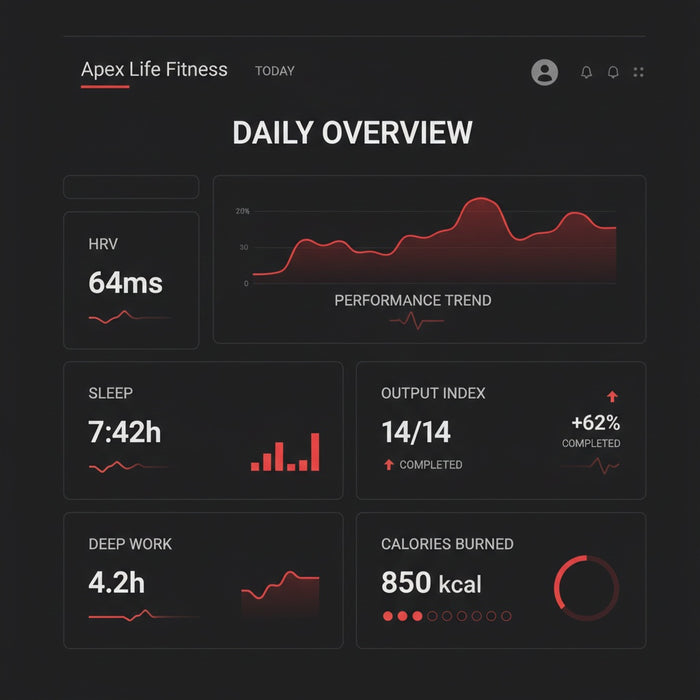
The Apex approach centers on “compound performance.” We don’t merely optimize one aspect of the operator – their cardiovascular system, their cognitive function, or their muscular endurance. Instead, we build a system where these elements reinforce each other, creating exponential growth over time. This isn’t a sprint; it’s a marathon of deliberate, disciplined execution.
Think of it like software development. A single, brilliant line of code doesn’t transform a system. It’s the consistent, iterative process of building, testing, and refining – the compounding of small improvements – that creates true value. Naval Ravikant’s first-principles thinking applies here: breaking down complex problems into their fundamental truths allows for a more robust and resilient approach to growth.
Stoic Discipline: The Foundation
At the core of The Apex Protocol lies Stoic philosophy. Marcus Aurelius’s Meditations provides a framework for cultivating mental resilience, focus, and emotional control. These aren’t abstract concepts; they’re practical tools for navigating the inevitable challenges of operating at a high level. Stoic practice – accepting what you cannot control and focusing your energy on what you can – directly translates to improved decision-making, reduced stress, and sustained performance.
This isn't about suppressing emotions. It’s about understanding them, recognizing their influence, and acting with clarity and purpose, regardless of your internal state. Jocko Willink’s emphasis on discipline and accountability provides a critical complement to the Stoic framework, ensuring consistent execution.
Movement as the Baseline
Establish a Consistent Movement Protocol
Our baseline protocol involves 7-10 sessions of purposeful movement per week. This isn’t about elaborate gym routines or grueling workouts. It’s about building a habit of physical engagement, prioritizing foundational movement patterns – squatting, pushing, pulling – and developing a deep understanding of your body’s capabilities. We layer in specific training modalities based on individual needs and goals, but the movement baseline is non-negotiable.
Mental Clarity Through Stoic Practice
Implement a Daily Stoic Practice
This consists of 15-30 minutes of daily Stoic reflection, utilizing prompts from Meditations or similar texts. The goal isn’t to achieve enlightenment, but to cultivate mental clarity, resilience, and a sense of perspective. This practice trains the mind to respond effectively to stress, make rational decisions, and maintain a calm, focused state of operation.
Illustration: A Founder Running Too Hot
Consider a founder operating at constant maximum intensity, chasing every lead and feature. The Apex approach does not add another intervention. It installs a consistent movement schedule and a daily Stoic practice, then holds them long enough to compound. The aim is sustained output without the crash that follows high-intensity sprints.
Frequently Asked Questions
Q: Is a personalized intervention necessary? A: While we can tailor our recommendations based on your individual needs and goals, the core principles of The Apex Protocol – consistent movement and daily Stoic practice – remain the foundation.
Q: How much time does this require? A: We recommend dedicating at least 15-30 minutes a day to Stoic practice, alongside the weekly movement baseline. Consistency matters more than duration: a short practice done every day compounds; a long one done occasionally does not.
Bryan Johnson’s Blueprint shows what aggressive intervention looks like. The Apex approach works underneath it: consistent movement, daily Stoic practice, and systems that let both compound for years.
Start with the free 5-Day Stoic Operator Challenge.