Fitness Trends for Entrepreneurs in 2026: What Apex Operators Are Actually Using

1. The Core: Movement Architecture – Beyond HIIT
The initial wave of “functional fitness” – the high-intensity interval training (HIIT) obsession – proved a fleeting distraction. It’s a useful tool, but not a system. What’s remained consistent within The Apex Protocol is a movement architecture built on foundational strength, deliberate mobility, and tactical conditioning. This isn’t about pushing to failure; it’s about building a resilient operating system for the body.
Specifically, we've seen a resurgence in low-impact, high-volume movement – think aquatic training, controlled resistance with bands, and targeted bodyweight circuits. The key is volume, executed with perfect form, layered with constant feedback through AI-powered motion capture. The goal is not explosive power, but sustained capability.
Protocol Step: Movement Diagnostics
Each operator begins with a full biomechanical assessment. AI identifies asymmetries, movement inefficiencies, and areas of potential stress. This informs a personalized movement protocol, prioritizing corrective work before any conditioning.
2. Neuro-Stoic Integration – The Operating System
The initial attempts to simply “add mindfulness” to the fitness equation failed. It’s not about achieving a state of bliss; it’s about building a stoic operating system. We’ve refined the integration of neurofeedback and Stoic principles to create a system of self-regulation under pressure.
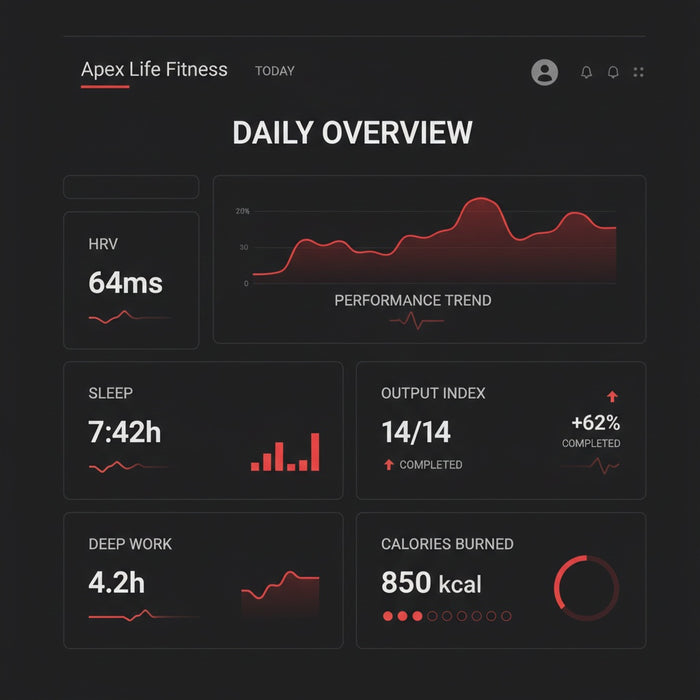
This involves real-time monitoring of physiological data (heart rate variability, cortisol levels) coupled with guided Stoic exercises – focused attention, negative visualization, acceptance of what you cannot control. The system isn’t designed to eliminate stress, but to manage its impact on performance.
Ryan Holiday emphasizes the importance of “control what you can, accept what you cannot.” This is the core principle. We’ve built a system to operationalize this.
3. AI-Driven Personalized Recovery – Beyond Sleep Tracking
Sleep tracking was ubiquitous, predictably ineffective. The focus shifted to granular, AI-driven recovery protocols. We’re leveraging biosensors – embedded in clothing, integrated with wearable tech – to monitor muscle fatigue, inflammation markers, and even subtle changes in neural activity.
Based on this data, the system dynamically adjusts recovery protocols: targeted stretching, compression therapy, personalized nutrition recommendations, and even subtle auditory interventions designed to promote relaxation and neural recalibration. It’s not just about resting; it’s about actively guiding the body back to optimal homeostasis.
4. Systems Thinking – The 80/20 Rule Applied
Early attempts to optimize individual exercises – “perfecting the squat” – proved wasteful. The Apex Protocol emphasizes systems thinking. We identify the 20% of movements and activities that generate 80% of the results – and relentlessly optimize those.
This includes analyzing workflows, eliminating unnecessary tasks, and streamlining processes. It's about creating a system that supports peak performance, not a collection of isolated improvements.
Naval Ravikant taught us to focus on first principles. We apply this to every aspect of the operator’s life – from their training to their business strategy.
5. The ‘Meta-System’ – Data as a Weapon
The most significant shift is the integration of data across *all* domains. Not just fitness data, but also data from their business, their relationships, their personal development. The AI aggregates this information to identify patterns, predict potential challenges, and optimize their overall operating architecture.
This “meta-system” allows operators to anticipate problems, proactively adjust their strategies, and maintain a state of continuous improvement. It’s about leveraging data to make smarter decisions, not just tracking performance.
An Illustrative Example
Consider a biotech founder who has struggled with burnout and cognitive fatigue. A protocol built on neuro-stoic integration and AI-driven recovery would start by looking for the patterns behind that fatigue.
A typical finding would be that late-night work sessions line up with weaker cognitive output the next day. The recovery protocol then targets that pattern directly. The point is not one heroic change; it is a data-driven system that addresses the actual cause.
7. The Evolution of Movement – Reactive Conditioning
The emphasis has shifted from static strength to reactive conditioning – the ability to respond quickly and with control to unpredictable load: changes of direction, uneven surfaces, sudden demands. It trains the body for the conditions real life delivers, not just the ones a gym controls.
Build it on the strength and mobility base first. Reactive work layered on a weak foundation is how injuries happen.
The trends that last are the ones that work as systems: a movement architecture, a Stoic operating system, recovery treated as discipline, and data used to make better decisions. Fix the OS first. To start building yours, take the free 5-Day Stoic Operator Challenge.