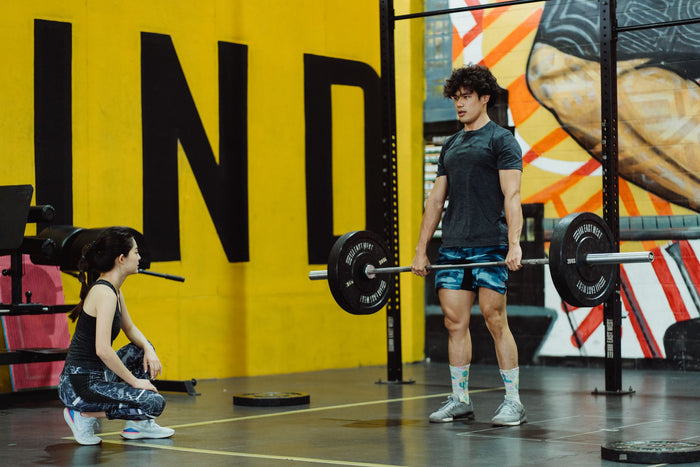
Can AI Replace a Human Performance Coach? The Honest Answer in 2026

The Premise: Compound Performance is Not a Single Variable
The pursuit of peak performance is often framed as optimizing a single element: training volume, nutrition, recovery. This is a fundamental misdirection. True progress emerges from the compounded effect of disciplined systems, a stoic mind, and the intelligent leverage of technology. We build operators, not simply athletes.
In 2026, the question of AI replacing human coaches isn't about a binary shift. It’s about integration. AI offers precision; the human coach offers context. The Apex Protocol is built on this understanding – it’s about forging a system, not chasing a fleeting trend.
What AI Does Better: Data & Protocol Execution
AI excels at quantifiable data analysis. It can track reps, heart rate variability, sleep patterns, nutrition intake—with a fidelity a human eye could never maintain. This data isn't simply observed; it’s fed directly into a system, creating incredibly detailed performance profiles.
More importantly, AI can execute protocols flawlessly. It can deliver personalized workouts, adjust nutrition recommendations based on real-time feedback, and monitor adherence with unwavering consistency. This isn't about automation; it’s about relentless, objective execution. Fix the OS first.
What AI Does Worse: The Foundation of Meaning & Adaptability
AI lacks intrinsic understanding. It can identify patterns, but it cannot grasp the *why* behind them. It doesn’t understand the athlete’s history, their motivations, their vulnerabilities. It cannot appreciate the subtle shifts in energy, the moments of doubt, the quiet signals of overtraining.
Crucially, AI struggles with truly novel situations. It relies on pre-programmed algorithms. When faced with an unexpected obstacle – a sudden illness, a change in environment, a shift in mental state – it will likely default to established protocols, often inappropriately. This is where the human coach’s adaptability, informed by experience and intuition, becomes critical.
The Irreplaceable Human Element: Context & Calibration
Ryan Holiday speaks of "showing up" as a form of discipline. But showing up requires more than just executing a plan. It requires a belief in the plan, a willingness to accept discomfort, a quiet confidence built on a foundation of understanding. This is the domain of the human coach.
The coach provides calibration. They translate raw data into actionable insights, connecting the numbers to the individual’s experience. They ask the difficult questions: “Are you truly pushing yourself, or are you simply reacting to the algorithm?” They foster self-awareness, a cornerstone of stoic practice.
AI as a Tool, Not a Replacement
Naval Ravikant often returns to First-principles thinking – breaking complex problems down into their fundamental truths. AI is a powerful tool for this process – analyzing vast datasets to reveal underlying truths about performance. However, the interpretation of those truths requires a human mind, guided by principles of discipline and clarity.
Marcus Aurelius understood that true strength lies not in brute force, but in the ability to control one’s reactions. AI can provide the data; the coach helps the operator cultivate the inner resilience to leverage that data effectively.
The Trajectory: A Hybrid Approach
By 2026, we’ve moved beyond the simplistic notion of AI replacing coaches. The most successful operators will be those who’ve integrated AI into a fundamentally human-centric system. This is a symbiotic relationship – AI providing the precision, the human providing the wisdom.
Jocko Willink emphasizes the importance of unwavering confidence. This confidence is built not on blind faith in technology, but on a deep understanding of one’s own capabilities, honed through disciplined practice and guided by a clear, purposeful system.
A Hypothetical Case: Adaptive Strength Training
Consider an AI-driven strength protocol built for a competitive cyclist, using biosensors and real-time muscle fatigue analysis. The AI delivers a highly specific program focused on optimizing power output.
Now suppose the athlete starts showing diminishing returns and the AI keeps applying the same protocol, failing to account for the psychological fatigue associated with the increased intensity. A human coach, observing the athlete’s demeanor and incorporating subjective feedback, recalibrates the program, adding rest periods and returning to foundational movement patterns. That is the judgment the algorithm cannot supply on its own.
Frequently Asked Questions
Will AI eventually replace all coaches?
No. While AI will become increasingly sophisticated, it will never fully replicate the human element of coaching – the empathy, the intuition, the ability to inspire and motivate.
AI will keep getting better at measurement and execution. The coach’s job moves up the stack: context, calibration, and the hard questions. The operator who uses both, and lets neither do his thinking for him, compounds.
Start building that system with the 5-Day Stoic Operator Challenge.