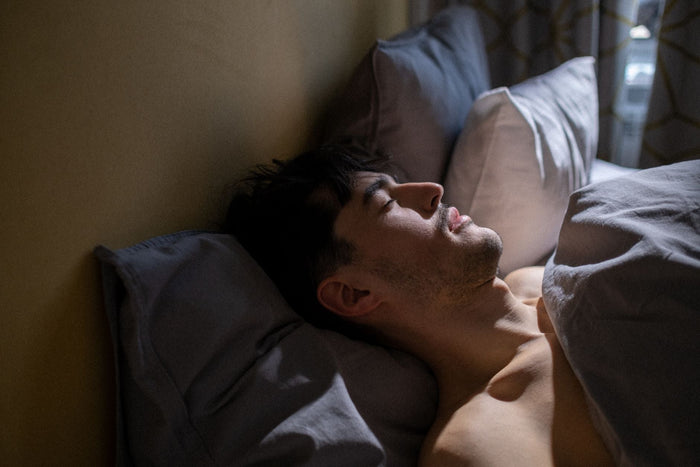
Afternoon Slump: The Post-Lunch Dip Is Circadian, Not Weakness, and Here Is the Operator's 2 p.m. Protocol

The afternoon slump is not a character flaw. It is a timing signal your biology sends every day, and it arrives whether or not you ate lunch.
Every operator knows the hour. Somewhere between two and four the proposal that flowed at nine turns to glue. The call you could have run in your sleep now requires effort to follow. The hand reaches for a third coffee, and the evening's sleep pays for it.
Most advice treats the slump as a willpower problem or a lunch problem. The research says it is primarily a clock problem, made worse by lunch, sleep debt, sitting and badly timed caffeine. That distinction matters, because you cannot discipline a circadian rhythm. You can only schedule around it and remove the things that deepen it.
Education, not diagnosis. If fatigue persists for weeks despite adequate sleep, or comes with other symptoms, see a doctor; the clinics are clear that several medical conditions present as tiredness.
The dip is circadian, not weakness
The clearest account comes from a review in Clinics in Sports Medicine titled "The post-lunch dip in performance". It describes "a dip in performance during the midafternoon hours (referred to as the post-lunch dip) that is linked to an increase in sleep propensity at that time of day."
The sentence that should change how you think about your two o'clock: "The post-lunch dip is a real phenomenon that can occur even when the individual has had no lunch and is unaware of the time of day." The review traces it to biology, noting that it "may be linked to the size of the 12-hour harmonic in the circadian system."
Lunch is not innocent, though. The dip "is certainly exacerbated by a high-carbohydrate lunch, and may be more likely to occur in extreme morning-type individuals." Two practical consequences follow. What you eat changes the depth of the dip but not its existence. And if you are the operator who trains at six and does your best thinking before nine, the research suggests your afternoon dip may be deeper than your night-owl co-founder's.
Harvard Health describes the same window from the other side: "napping in the early afternoon when your body experiences a natural circadian dip, is the best way to catch a few winks without disturbing the sleep-wake cycle." The dip is predictable enough to plan a nap around. It is predictable enough to plan a day around.
What makes the dip deeper
Four inputs turn a shallow circadian dip into a lost afternoon. Each has a source and each is a decision.
Sleep debt
The Cleveland Clinic states it without hedging: "Chronic sleep deprivation puts you squarely behind the eight ball and worsens your afternoon slump." The slump is where last night's six hours show up. If you are also noticing slower thinking all day, read the brain fog guide; the sleep lever is the same.
A heavy, high-carbohydrate lunch
The Cleveland Clinic's dietitian guidance on feeling tired after eating explains the mechanism in two parts. Size: "Heavy meals take longer to digest," so a bigger meal means "your body has to work a little extra hard to digest that meal." Composition: the clinic's afternoon-slump guidance says that "Eating lots of stripped carbs and sugar at any meal or snack spikes your blood sugars. This triggers the release of large amounts of insulin into your bloodstream. Then your blood sugars plummet, and you're left exhausted and hungry."
The same guidance adds a lunch rule operators ignore at conferences: "be cautious with alcohol, as it can lead to feeling more sluggish after a meal."
Sitting through the glucose curve
What you do in the hour after lunch changes the glucose response to it. A 2022 meta-analysis in Sports Medicine, pooling seven one-day randomised crossover trials, found that interrupting sitting with standing "significantly reduced postprandial glucose" and that light-intensity walking did more, attenuating both glucose and insulin "compared to continued sitting." Walking beat standing head to head, and the authors concluded that "light-intensity walking was found to represent a superior physical activity break."
The operator who eats at a desk and stays there has chosen the worst available version of the curve.
Caffeine taken inside the dip
The instinctive fix is the one that costs the most. A study in the Journal of Clinical Sleep Medicine, "Caffeine effects on sleep taken 0, 3, or 6 hours before going to bed", gave 400 mg of caffeine at bedtime, three hours before and six hours before, and found each "have significant effects on sleep disturbance relative to placebo." The conclusion supports the rule "to refrain from substantial caffeine use for a minimum of 6 hours prior to bedtime."
A 3 p.m. coffee against a 10 p.m. bedtime is a seven-hour gap, which looks safe until you remember the study used six hours as its minimum and found disruption at that distance. The caffeine half-life article runs the arithmetic in full. The short version: a coffee in the dip buys this afternoon with tonight's sleep, which deepens tomorrow's dip.
The levers, in order
Ranked by how much of the slump each one controls, and by how direct the evidence is.
1. Sleep first
Nothing else on this list survives a short night. The Cleveland Clinic's recommendation is "seven to nine hours of sleep each night," and its advice to "Track the hours you sleep" is the right first step, because most operators overestimate. Fix the window and the slump shrinks before you change anything else. The founder sleep protocol is the full build.
2. Lunch composition, then the walk
The Cleveland Clinic's rule for lunch: "Eat whole foods, quality protein and nourishing fats at breakfast and lunch to conserve insulin all day." A balanced meal "that contains whole foods, protein, fiber and healthy fats," in the dietitian's phrasing, and not a large one.
Then move. The evidence above puts light walking ahead of standing and far ahead of sitting. The post-meal walking rule is ten minutes on your feet after lunch, started within the first half hour. Walking meetings exist for this hour.
3. Movement and daylight inside the dip
When the dip arrives anyway, the clinic's physician advice is direct: "Take a walk, it improves blood flow to your head." Five minutes outside also puts daylight in your eyes; the sources here do not quantify a light effect on the dip, so treat daylight as a reasonable companion to the walk rather than a measured lever.
4. A short nap, where the schedule allows
This is the lever with the most precise evidence. A study in the journal Sleep, "A brief afternoon nap following nocturnal sleep restriction: which nap duration is most recuperative?", restricted 24 healthy young adults to about five hours of night sleep and then compared no nap with naps "of precisely 5, 10, 20, and 30 minutes of sleep" at 3 p.m.
The results are a dosing chart. "The 5-minute nap produced few benefits in comparison with the no-nap control. The 10-minute nap produced immediate improvements in all outcome measures (including sleep latency, subjective sleepiness, fatigue, vigor, and cognitive performance), with some of these benefits maintained for as long as 155 minutes." Twenty minutes worked too, but later: "The 20-minute nap was associated with improvements emerging 35 minutes after napping." Thirty minutes carried a cost: it "produced a period of impaired alertness and performance immediately after napping, indicative of sleep inertia." The authors' verdict: "the 10-minute nap was overall the most effective afternoon nap duration of the nap lengths examined in this study."
A smaller study in Clinical Neurophysiology, on a 20-minute nap in the mid-afternoon, found that "The 20 min nap improved the subjective sleepiness, performance level and self-confidence of their task performance" in seven young adults. Harvard Health's practical rules match: "Some experts recommend naps should last no more than 30 minutes," and "give yourself 10 minutes after napping before engaging in mentally or physically demanding tasks." Its note on workplace stigma is also worth having in your pocket: "there is solid evidence that an afternoon nap can improve a worker's cognitive performance, especially for complex tasks."
The Cleveland Clinic's version is the shortest: "plan a 5- to 10-minute power nap in the early afternoon." Ten minutes of actual sleep, timer set for about twenty to allow for falling asleep, then ten minutes before the next hard task. If you cannot nap at work, lever three is the substitute.
5. Caffeine, moved earlier rather than added later
The caffeine study above sets the floor at six hours before bed. The Apex rule is stricter: caffeine belongs in the morning blocks, before the first Build block, and the afternoon runs on levers one to four. If you keep one afternoon coffee, it goes immediately after lunch, not at three, and never later than the six-hour line.
Schedule the day around the dip
The operator's advantage is that the dip is predictable. You know roughly when it arrives, and the research says it arrives regardless. So stop fighting it with difficult work and route the difficult work around it.
- Build before the dip. The hard, single-document work goes in the morning block, after training and before the inbox, which is the architecture time blocking already prescribes.
- Shallow in the dip. Email, scheduling, invoicing, routine client messages and admin go between two and four. If output falls in that hour, nothing important falls with it.
- Walk at the boundary. The post-lunch walk is the hinge between the Build block and the shallow block, and it is the lever the glucose research supports.
- Nap or move at the trough. Ten minutes of sleep, or five minutes outside, scheduled, not improvised when the yawn arrives.
- Second Build block late. Many operators find a second window of clarity after four. Protect it for one more piece of real work, then close the day with the evening review.
Morning types, whom the research flags as more likely to dip, should hold this structure most strictly. The clock that makes you sharp at seven is the same one that makes two o'clock expensive.
The 10-day protocol
Ten days, one variable at a time, so you learn which lever your slump actually answers to.
- Days 1 to 2: measure. Rate alertness from one to five at 10 a.m., 2 p.m. and 4 p.m. Log time in bed, lunch contents, caffeine times and minutes walked after lunch. Change nothing yet.
- Days 3 to 4: sleep window. Fix lights-out and wake time to give at least seven hours in bed. Keep logging.
- Days 5 to 6: lunch and the walk. Protein, fibre, fats, moderate size, no refined sugar at the desk, and ten minutes walking within thirty minutes of finishing. Keep the sleep window.
- Day 7: caffeine line. Last caffeine before noon. Expect the two o'clock rating to feel worse on this day; judge it on day nine.
- Days 8 to 9: the dip plan. Shallow work scheduled between two and four, Build blocks before and after, and either a 10-minute nap with a 20-minute timer or five minutes outside at the trough.
- Day 10: review the log. Compare the 2 p.m. ratings from days 1 to 2 with days 8 to 9. Note which lever produced the largest change. Keep all five, but you now know which one to protect first on a bad week.
Frequently asked questions
Why do I get tired every afternoon around 2 or 3 p.m.?
Because the body has a circadian dip in alertness in the midafternoon. A review in Clinics in Sports Medicine describes the post-lunch dip as a real phenomenon linked to increased sleep propensity at that time, one that can occur even without lunch and without knowing the time of day. Sleep debt, a heavy high-carbohydrate lunch, sitting and late caffeine make it deeper.
Does eating lunch cause the afternoon slump?
Lunch deepens it rather than causes it. The post-lunch dip occurs even in people who skipped lunch, according to the research, but it is exacerbated by a high-carbohydrate meal. The Cleveland Clinic notes heavy meals take longer to digest and that refined carbohydrates and sugar spike blood sugar, trigger a large insulin release and leave you exhausted. Smaller, protein-and-fibre lunches and a short walk reduce the effect.
How long should an afternoon nap be?
About ten minutes of actual sleep. A study in Sleep comparing 5, 10, 20 and 30 minute naps after a restricted night found the 10-minute nap produced immediate improvements in sleepiness, fatigue and cognitive performance lasting up to 155 minutes, while the 30-minute nap caused sleep inertia on waking. Harvard Health suggests no more than 30 minutes and ten minutes to recover before demanding work.
Is coffee a good fix for the afternoon slump?
It is the fix that costs the most. A study giving 400 mg of caffeine six hours before bed found significant sleep disturbance, supporting a rule of no substantial caffeine within six hours of bedtime. A 3 p.m. coffee against a 10 p.m. bedtime sits near that line and trades tonight's sleep for this afternoon, which deepens tomorrow's dip. Move caffeine to the morning instead.
Does walking after lunch help with the afternoon slump?
It helps the part of the slump that lunch causes. A 2022 meta-analysis found light-intensity walking breaks reduced post-meal glucose and insulin more than standing, and both beat continued sitting. Cleveland Clinic physicians also recommend a walk to improve blood flow when energy drops. Ten minutes on your feet within half an hour of lunch is the protocol.
Route the work around the clock
The afternoon slump is one of the few performance problems with a known schedule. It arrives mid-afternoon, it is written into the circadian system, and the research is clear that no lunch choice or willpower removes it. What you control is its depth and what you ask of yourself while it passes.
Sleep sets the depth. Lunch and the walk shape the curve. A ten-minute nap or five minutes outside cuts through the trough. Caffeine moves earlier. And the hard work moves to the hours when you are built to do it, which is the operating principle behind every block on an Apex calendar.
The free 5-Day Stoic Operator Challenge installs that calendar: training before the day begins, a Build block before the dip, and an evening review that closes the day and protects the sleep window the whole system depends on. Five days is enough to see your two o'clock change.